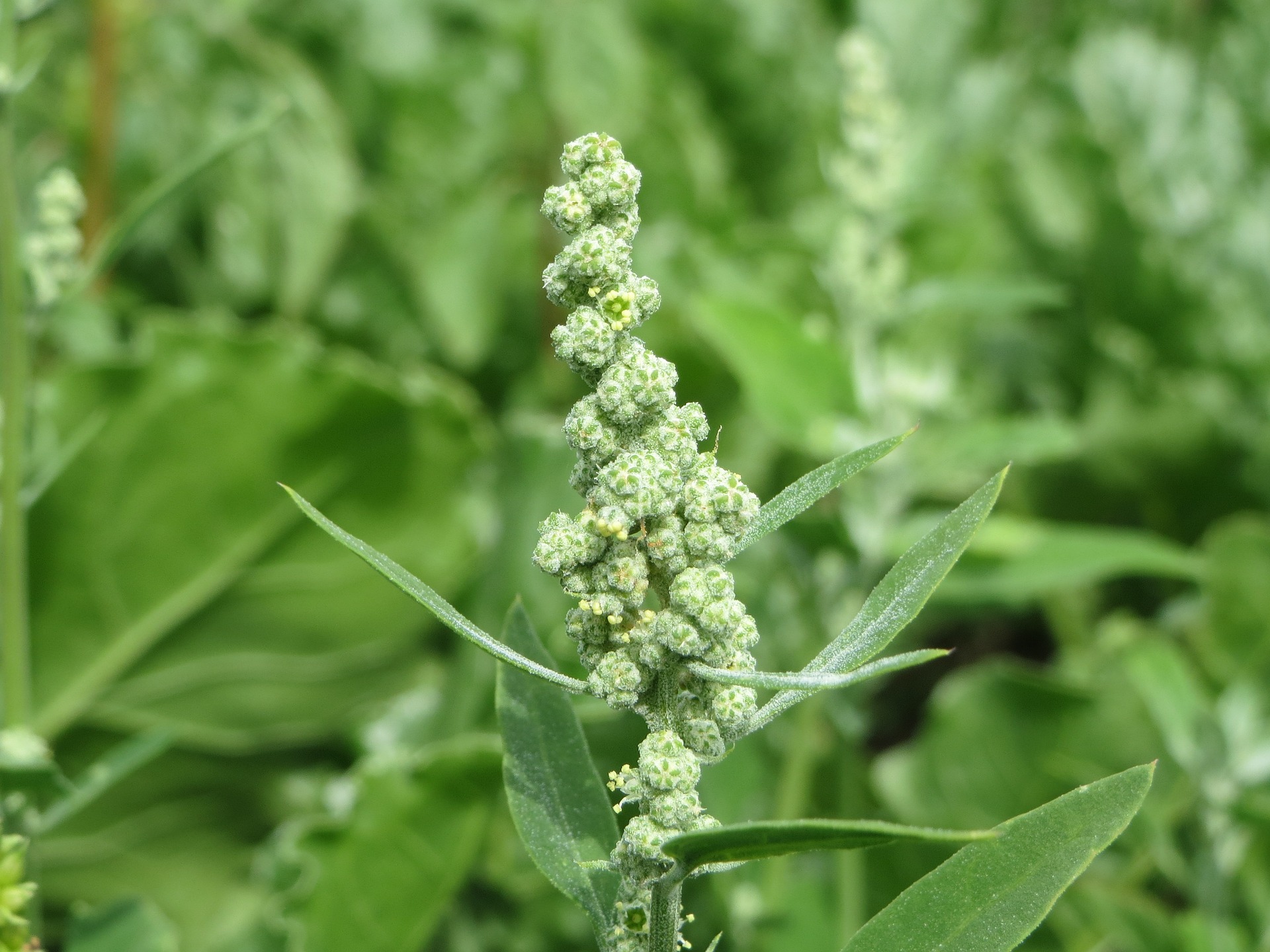
Fat hen / Goosefoot
(Chenopodium album)
Edibility
Top of the pops! I can eat young leaves by handfuls. Use very similar to spinach. Has some bonuses – very sturdy, flowers and seeds also edible (family of quinoa). Chenopodium greens are rich in protein, vitamins A, B1, B2 and C, and niacin, calcium, phosphorus, iron, and omega 3 fatty acids. Once upon a time, when popeye spinach was not yet cultivated, fat hen was a staple leafy vegetable, but has been forgotten since. Safest and easiest way to use fat hen is to cook leaves as if it would be spinach or cabbage. Raw leaves contain nitrates and oxalic acid, so it is advised to consume raw leaves in moderation (but I encourage you to try them – they are very satisfying). Tops with flower or yound seeds can be used as bimis (sprouted broccoli). Mature seeds have a thin membrane that contains saponins, so it is advised to soak them overnight and discard the water.
Medicinal use
Fat hen is also used as a mildly medicinal plant, e.g., infusion is used in treatment of rheumatism, crushed leaves are applied to bug bites and sunburns.
Misidentification dangers
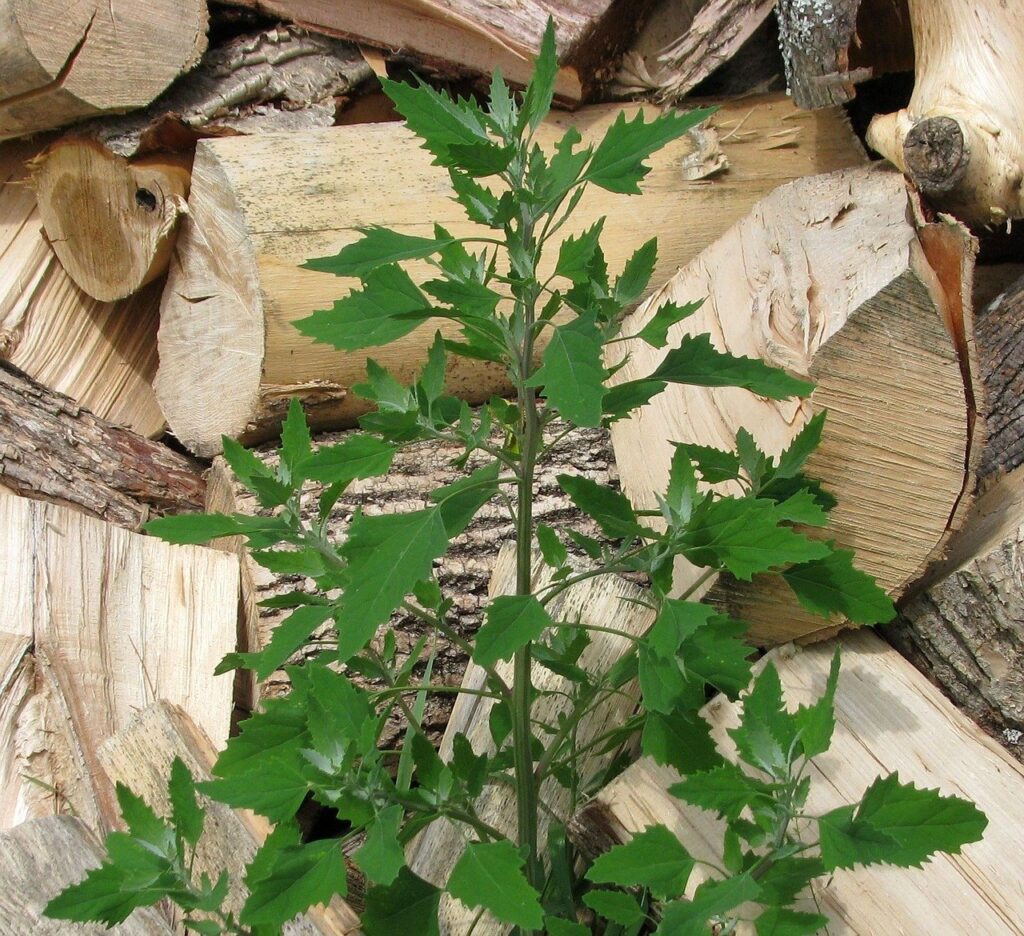
One of the identification aspects of fat hen, is that its leaves are covered with powdery coating, and once you know the plant it is very easy to recognise. However, for the beginners, young plant leaves may resemble the leaves of the deadly nightshide. Before consuming any wild foods, make extensive research and be sure you can identify the plant 100%.