Carqueja
(Pterospartum tridentatum)
Identification and uses
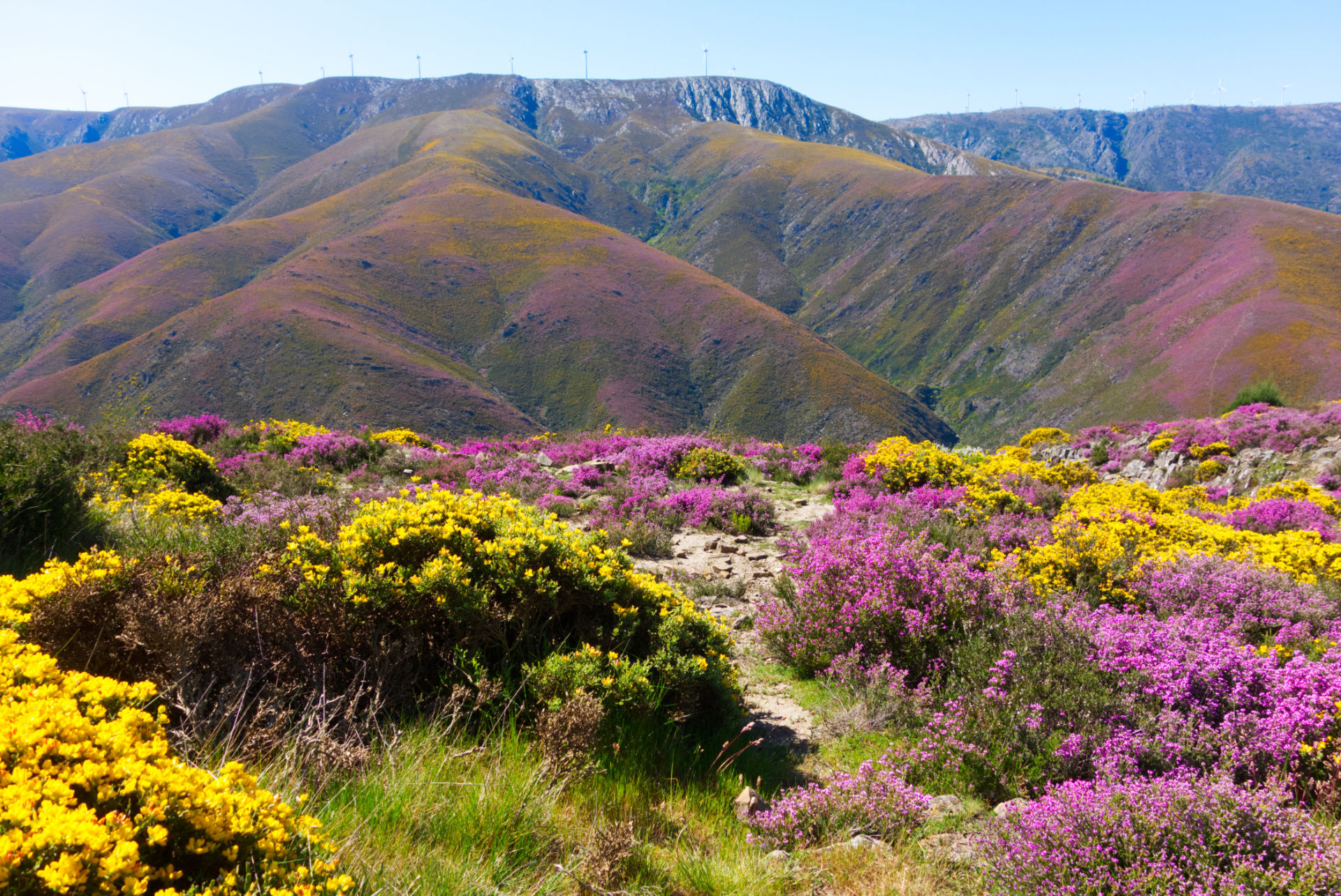
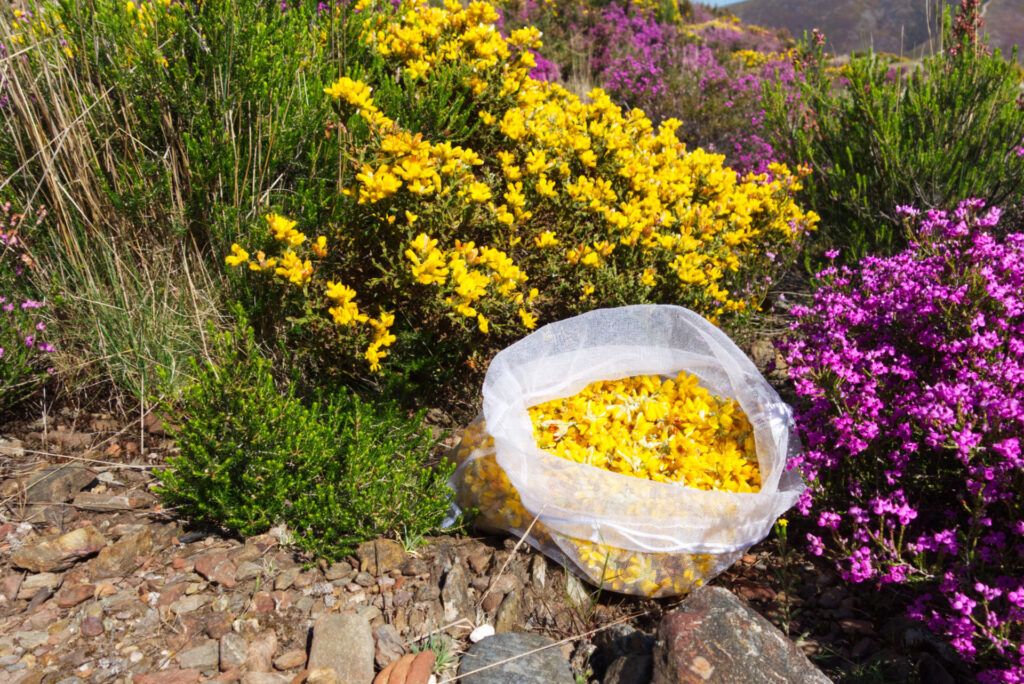
If you have a chance, head to the mountains of Central and Northern Portugal in the next weeks to marvel at the brightly blooming carqueja (couldn´t find a precise name in English..probably because there is none for this species). A native Portuguese plant that has many uses and benefits, but nowadays most commonly is used to make tea and take advantage of its medicinal properties.
Carqueja flowers are very similar to those of gorse and broom, so the identification of the plant is best done by the particular appearance of the stems.
Carqueja tea helps to strengthen the immune system because it contains antioxidants, improves liver function, helps control blood glucose levels, helps in case of fluid retention because it is diuretic, reduces symptoms of cold and more.
In cooking, the stems come in handy, for example, to make the aromatic carqueja rice or other dishes where you want to add a “wild” flavour.
History and culture
Carqueja, being an extremely dry plant, was used to start fires in ovens and fireplaces. And this leads us to the sad story of the carquejeiras – women who transported the carqueja mounds from the Rio Douro through Fontainhas neighbourhood and into the city of Porto. A very tough job that kept the city ovens and fireplaces running. Search for and learn about the story behind the statue that was placed in Fontainhas, where carquejeiras used to go through.